Live-action anime adaptations have notoriously had a poor relationship with fans over the years. They’re usually burdened with so many problems, ultimately presenting just a much inferior version of the source material they’re adapting. As a result, these projects are constantly faced with enormous skepticism and are almost never well received by their audiences.
Adapting anime into live-action can be quite challenging as many series are revered for their grand premises and unique aesthetics, which are difficult to replicate outside of animation. However, some productions manage to circumvent this limitation with a high degree of success. There are many ways to make an ambitious live-action effort thrive, and this production is definite proof.
Gintama (2017)
2017 Gintama live action films are adaptations that are true to the spirit of their source material. It features the hilarious slapstick comedy and fourth wall breaking that the series is so famous for, and captures the eccentric nature of its characters perfectly. It doesn’t skimp on samurai action either, with exciting fight scenes enhanced by special effects.
It was the third highest-grossing domestic film of 2017 and was succeeded by its sequel Gintama 2: Rules Are Made to Be Brokenwhich is just as entertaining. The events of the film largely cover the Benizakura Arc, as Gintoki and his crew tackle two seemingly unrelated tasks that are more connected than they thought.
Bleach (2018)

As one of the most popular Shonen titles ever, with significant supernatural elements, it is compelling Bleach in live action it will always be a challenge. This proved to be one of the things director, Shinsuke Sato, wanted for his 2018 work Bleach the film received approval from many fans.
The film adapts the Soul Reaper Substitute Arc from the story. It focuses primarily on the relationship between Ichigo and Rukia, as well as Rukia’s confrontations with Byakuya and Renji. The department that stands out the most is the use of high-quality CGI and incredible fight choreography, bringing the otherworldly battles to life in an incredible way.
Ghost in the Shell (2017)

2017 Ghost in the Shell the live-action film is one of the most amazing anime adaptations ever produced. Despite this, the film is not without criticism, as many fans believe that the film lacks the philosophical depth of the original. This has also become a topic of controversy with accusations of covering up the film’s discourse.
Despite this, the quality is undeniable, far surpassing the level of live-action anime adaptations that fans are used to. The film truly immerses its audience into a futuristic cyberpunk atmosphere and recreates several iconic scenes from the 1995 film. While it doesn’t perfectly capture the deep message of its source material, it’s a thoroughly enjoyable watch.
Death Note (2006)

That Death Note the film premiered several months before the animated version. It masterfully showcases an intense battle of wits between the notebook-wielding Light Yagami and the brilliant detective L. Unlike the anime and manga, it takes some creative liberties and features a unique ending that is largely welcomed by the fan base.
One of the interesting things about this film is Kenichi Matsuyama’s portrayal of L. He gives a standout performance as he accurately mimics the strange behavioral patterns of the beloved antagonist. The project becomes even more appreciated in retrospect, especially as 2017 approaches Death Note the film and its very poor reception.
Kakegurui (2018)

That Kakegurui A live-action TV series premiered in 2018, just one year after the anime. It also faithfully adapts the content of the manga and features a charming cast that perfectly emulates the energy of the original characters. No attempt was made to reproduce the over-the-top antics of the key members and the luxurious atmosphere of the venue.
The series was followed by a sequel released in 2019, as well as a film featuring the same cast but with original developments. Several years later, Netflix produced a loosely titled adaptation Betone enjoyed by many in the general public but difficult for fans of the original work to accept.
One Piece (2023)

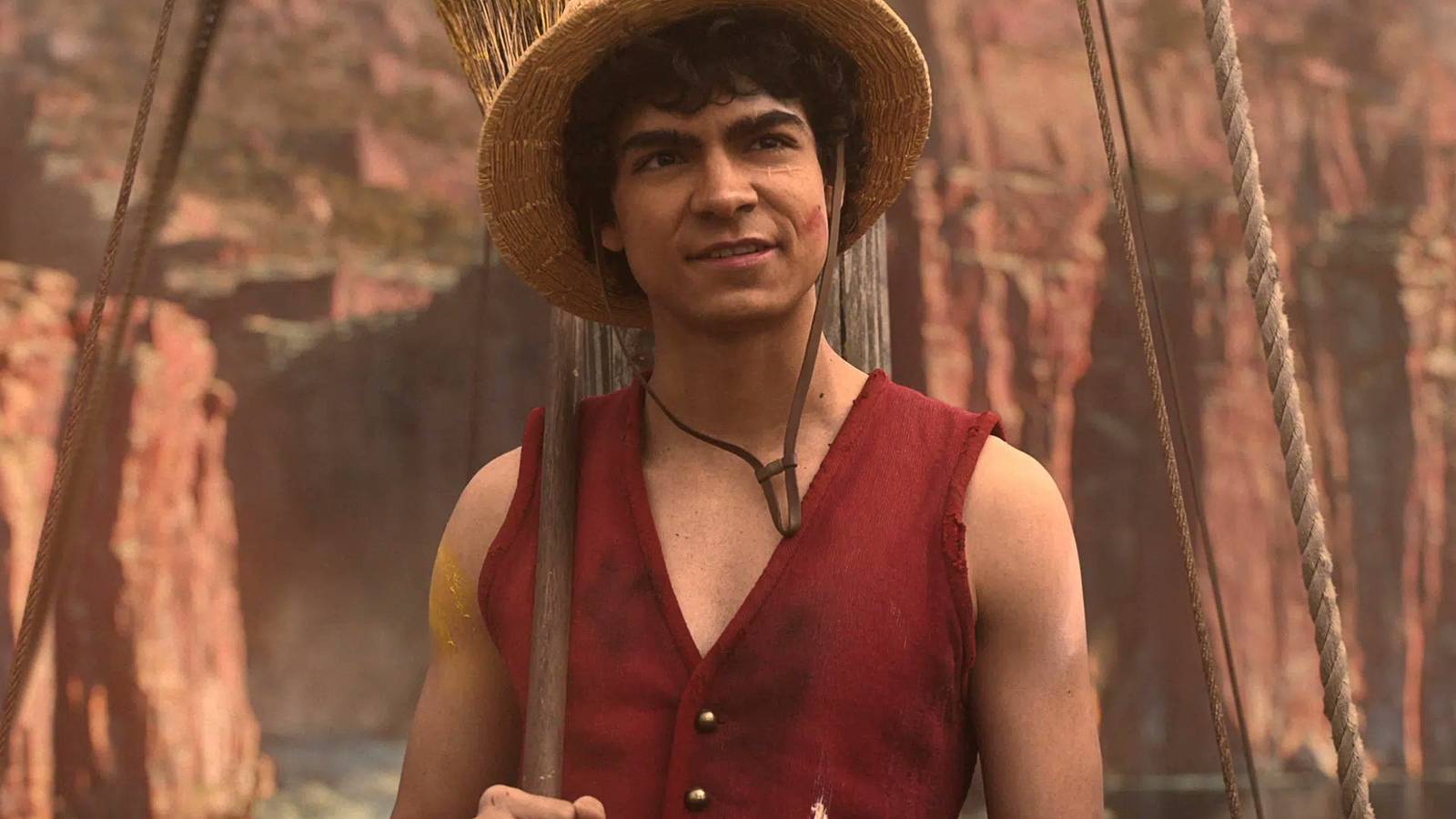
When word got out it was live-action One piece A TV series is currently in production, and of course fans are skeptical, but so far the series has proven to be a huge success. It was produced under the wise supervision of its creator, Eiichiro Oda, and the first season premiered in 2023, being renewed for a second season two weeks after its release.
The show has no problem embodying the manga’s expansive world and diverse characters, with stunning special effects and a heavy investment in general production design paying off handsomely. The main crew is also superbly cast, with their on-screen and off-screen chemistry clear for all to see, further enriching the experience.
Blade of the Immortal (2017)

The Eternal Blade is a hugely popular manga that received a live-action adaptation in 2017. The story follows the immortal samurai Manji, who is cursed by an eight-hundred-year-old nun who uses supernatural bloodworms to keep him alive forever. He is joined on his journey by the vengeful Rin, who seeks revenge against the people who killed his parents.
The narrative focuses heavily on the bodyguard role that Manji performs for Rin, as well as the evolution of their relationship over time. The battle scenes are impressive, and feature a lot of gore and wild action. The film is directed by renowned director Takashi Miike, with legendary actor Takuya Kimura playing Manji.
Alice in the Borderlands (2020)

That Alice on the Border The TV series was also directed by Shinsuke Sato and ran for three seasons, the last of which was not as acclaimed as the first two seasons. The plot follows Ryouhei Arisu, who is transported to an alternate version of Tokyo and forced to participate in a series of high-stakes survival games.
The series features gripping psychological suspense, fatal challenges represented by card games, and compelling characters that will keep you glued to the screen. This is undoubtedly one of the most famous and successful live-action anime adaptations produced by Netflix. Unfortunately, the third season is certain to be the last.
Rurouni Kenshin (2012)

In 2012 Rurouni Kenshin the film is the first of five phenomenal films that collectively stand at the pinnacle of domestic Japanese live-action adaptations. They perfectly recreate the culture and landscape of the Meiji Era in which the film is set, and feature incredible swordplay choreography that rivals the best of the best in the jidaigeki genre.
They faithfully depict much of Kenshin’s journey as shown in the anime and manga, while bringing beloved allies and formidable antagonists to life in the most authentic way possible. It’s a comprehensive experience that’s sure to evoke a variety of emotions through its engaging storytelling.
Alita: Battle Angel (2019)

Alita: Battle Angel is considered the gold standard for anime-to-film adaptations for very obvious reasons. Produced by the world-famous James Cameron, the film showcases one of the most detailed cyberpunk worlds ever seen on screen. It meticulously reconstructs the atmosphere of 1990 Gun the manga on which it is based, is true to its visual and narrative essence.
This is achieved through a masterful blend of 3D and motion capture techniques, accurately reimagining definitive moments and key characters. The protagonist, Alita, is particularly notable for her large eyes, which were created with the manga design in mind. The project was first announced in 2003, but production did not begin until several years later due to Cameron’s commitment to Avatars.

- Release Date
-
February 14, 2019
- Processing time
-
122 minutes
- Director
-
Robert Rodriguez
PakarPBN
A Private Blog Network (PBN) is a collection of websites that are controlled by a single individual or organization and used primarily to build backlinks to a “money site” in order to influence its ranking in search engines such as Google. The core idea behind a PBN is based on the importance of backlinks in Google’s ranking algorithm. Since Google views backlinks as signals of authority and trust, some website owners attempt to artificially create these signals through a controlled network of sites.
In a typical PBN setup, the owner acquires expired or aged domains that already have existing authority, backlinks, and history. These domains are rebuilt with new content and hosted separately, often using different IP addresses, hosting providers, themes, and ownership details to make them appear unrelated. Within the content published on these sites, links are strategically placed that point to the main website the owner wants to rank higher. By doing this, the owner attempts to pass link equity (also known as “link juice”) from the PBN sites to the target website.
The purpose of a PBN is to give the impression that the target website is naturally earning links from multiple independent sources. If done effectively, this can temporarily improve keyword rankings, increase organic visibility, and drive more traffic from search results.